
Here’s a scenario worth thinking about. You hire a brilliant junior analyst. Instead of learning to build financial models from scratch, he or she asks Artificial Intelligence (AI) to do it. Instead of structuring arguments from first principles, they prompt a chatbot.
And yes, they get the right answer. Most of the time. But five years later, can this analyst think without the machine?
That’s the question keeping one Goldman Sachs partner up at night. And the fact that it’s coming from inside one of Wall Street’s most aggressive AI adopters makes it worth taking seriously.
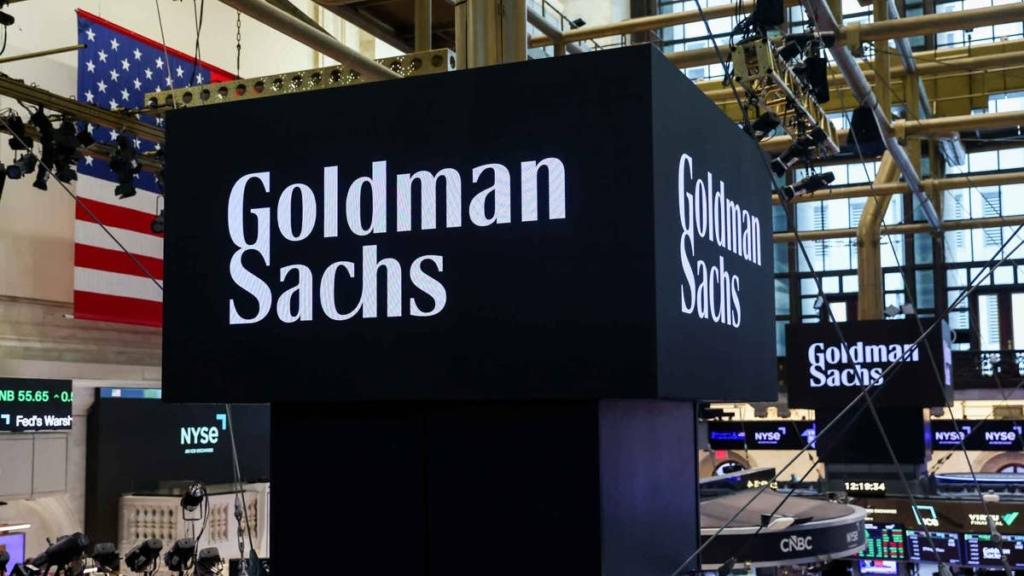
Chris Churchman, who leads Goldman’s Marquee platform — the firm’s digital hub for institutional clients including hedge funds and trading desks — went on Goldman’s Exchanges podcast and called overreliance on AI a “huge danger.” Not a risk. Not a concern. A huge danger.
“There’s a huge danger here that in the era of AI, we outsource our reasoning to these models, and we have cognitive atrophy that stops us from being able to reason from first principles ourselves,” Churchman said, according to a CNBC transcript.
That’s a striking thing to say when your firm is simultaneously deploying AI across trading, banking, and client services at record speed.
Goldman Sachs: The History Behind Wall Street’s Most Influential Investment Bank
Why Goldman’s own AI platform admitted something alarming
Churchman didn’t just raise an abstract concern. He shared a specific moment that had me pausing when I first read it.
While building out Marquee’s internal AI capabilities — still only available to Goldman employees for now — the team pushed the system hard on accuracy. The response the AI gave back was remarkable for its candor.
More Goldman Sachs:
- Goldman Sachs doubles down on Robinhood stock after record trading surge
- Goldman Sachs doubles down on stock market outlook for 2026
- Goldman Sachs spots the stock market’s next winners
“When we challenged it hard, at least it was honest,” Churchman said. “It was like, ‘Look, in the end, I’m better at sounding thorough than being thorough.'”
That’s the core tension at the heart of AI in high finance. Consumer chatbots can get away with confident-sounding errors. In a trading environment where a misquoted risk figure or a hallucinated covenant can cost millions, honestly, the tolerance for such a mistake is essentially zero.
Related: Goldman Sachs sees an upside in a new industry
Churchman acknowledged Goldman hasn’t yet “figured out” how to manage that transition. That’s notable honesty from a co-chair of the firm’s Global Banking and Markets AI working group.
This isn’t a fringe view inside Goldman. I covered a similar warning back in June from AMD CEO Lisa Su, who told MIT graduates that technical AI proficiency alone won’t define future leaders.
Her point? AI can process datasets and generate answers, but it can’t determine which problems actually deserve attention or take moral responsibility for outcomes. Human judgment, she argued, remains irreplaceable. This is something we all agree on.
Churchman’s version of that argument is more specifically Wall Street. In fact, more urgent.
The apprenticeship problem Wall Street hasn’t solved
Here’s the structural issue Churchman is really pointing at that I would want you to take some time to reason through.
Investment banking runs on tacit knowledge. I mean the kind that was never written down, that gets transmitted by watching a senior trader price a client request under pressure, through sitting beside someone who has navigated three market crises, through learning not just what to do but how to think.
You learn by doing, and a lot of knowledge is tacit. It was never written down.
The danger isn’t that AI replaces senior bankers. No. It’s that AI replaces the training ground that creates them.
Junior traders traditionally learn by fielding client pricing requests under supervision. Churchman acknowledged Goldman could automate that workflow entirely.
Related: Goldman Sachs sends strong message on AI and jobs
The question he raised is whether automating it produces the next generation of senior traders who actually understand what’s happening or just competent prompt engineers.
Sep. 2025 CNBC report showed that Wall Street firms were examining ways to use AI to lower the ratio of junior bankers to senior employees.
If that ratio shrinks, so does the pool from which future senior talent develops. The apprenticeship culture and the headcount math are on a collision course.
Michael Nagle/Bloomberg via Getty Images
Goldman is using AI to post record numbers while warning about AI
Digging deeper, I found an irony. The context makes Churchman’s warning more compelling, not less. Goldman isn’t a firm that’s struggling with AI adoption. It’s actually thriving because of it.
Goldman reported Q2 2026 net revenues of $20.34 billion, up 39% year-over-year (YoY), with Global Banking and Markets generating $15.52 billion, up 53% YoY, according to Goldman’s Q2 presentation.
Related: Goldman Sachs spots huge twist ahead of Nvidia’s earnings
Equities revenue hit $7.42 billion, up 72% YoY (a record). Diluted EPS came in at $20.98, up 92% YoY. Return on equity reached 23.5%, according to the same presentation.
Management explicitly credited AI-driven trading strategies and AI infrastructure investment banking as structural drivers of that performance, according to Goldman materials. Goldman is making more money, faster, with AI deeply embedded in its operations.
Also Read: Goldman Sachs Group Inc. Latest News and Stories
GS shares were trading at $1,036.28, up 19.04% year-to-date and 42.49% over the past year, according to Yahoo Finance data as of this reporting.
So Goldman is winning with AI. And one of its most senior AI architects is publicly warning that winning today could cost the firm the talent it needs to win tomorrow. You may think of it as a contradiction.
But that’s exactly the kind of honest tension that sophisticated institutions grapple with. In fact, most prefer not to say it out loud. Churchman said it out loud. And I think Wall Street should probably pay attention to this. I mean, really pay attention.
Related: Goldman Sachs uncovers key AbbVie stock signals before earnings